Allyz Assist — Allianz’s insurance assistance platform: book roadside help, a doctor or a repair without calling a call center.
Insurance assistance was phone-only: slow, opaque, impossible to scale. The product was a few pages assembled without a designer, and the dev team had never worked with one.
Sole designer for 1.5 years — research, personas, CJM, information architecture, end-to-end UI, and a design system built from scratch, while teaching the team how to work with design.
MVP launched in France in December 2023 and expanded to Poland. The design system was adopted by Allianz as the foundation for all Allyz verticals.
"All insurance assistance was requested by phone. We needed to move it fully online — fast, clear, and from any device."
When I joined, the project consisted of a few pages and a couple of modal windows. There was no dedicated designer — the initial UI had been assembled by designers from other verticals whenever they had spare time, and it showed: inconsistent patterns, no system, no research foundation. The development team had never worked closely with a designer before.
The audience made the stakes concrete: insurance holders aged 35–60, busy people who needed practical help fast. Competitive analysis showed the European market lacked convenient digital assistance services — most solutions were outdated, with only partial online transitions. The opportunity was clear: request a service quickly, easily, with minimal bureaucracy.
Take an MVP to market, collect data from real users, refine on what it showed — then repeat the whole thing in a second country. Both happened inside my year and a half: France first, Poland after.
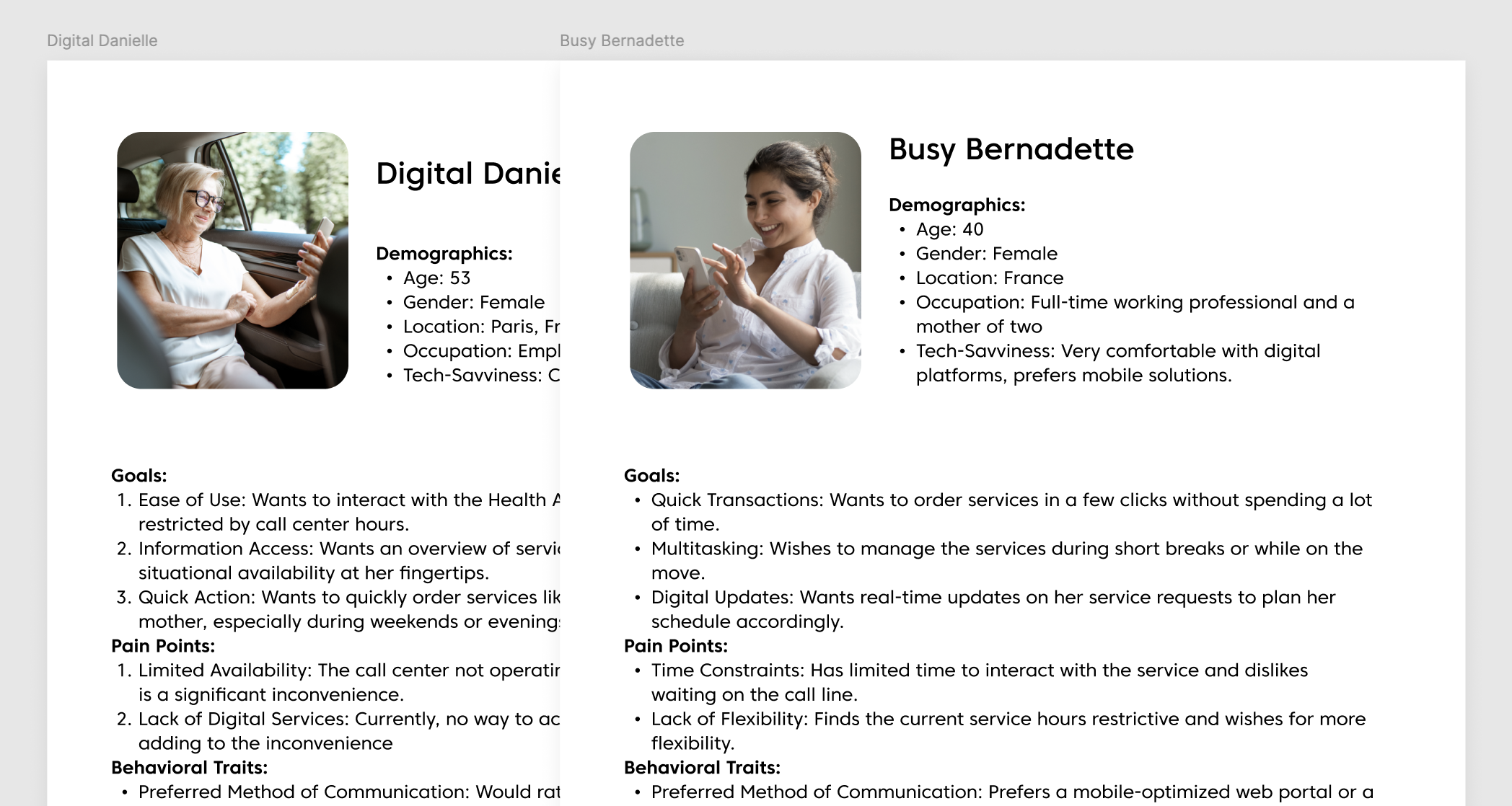
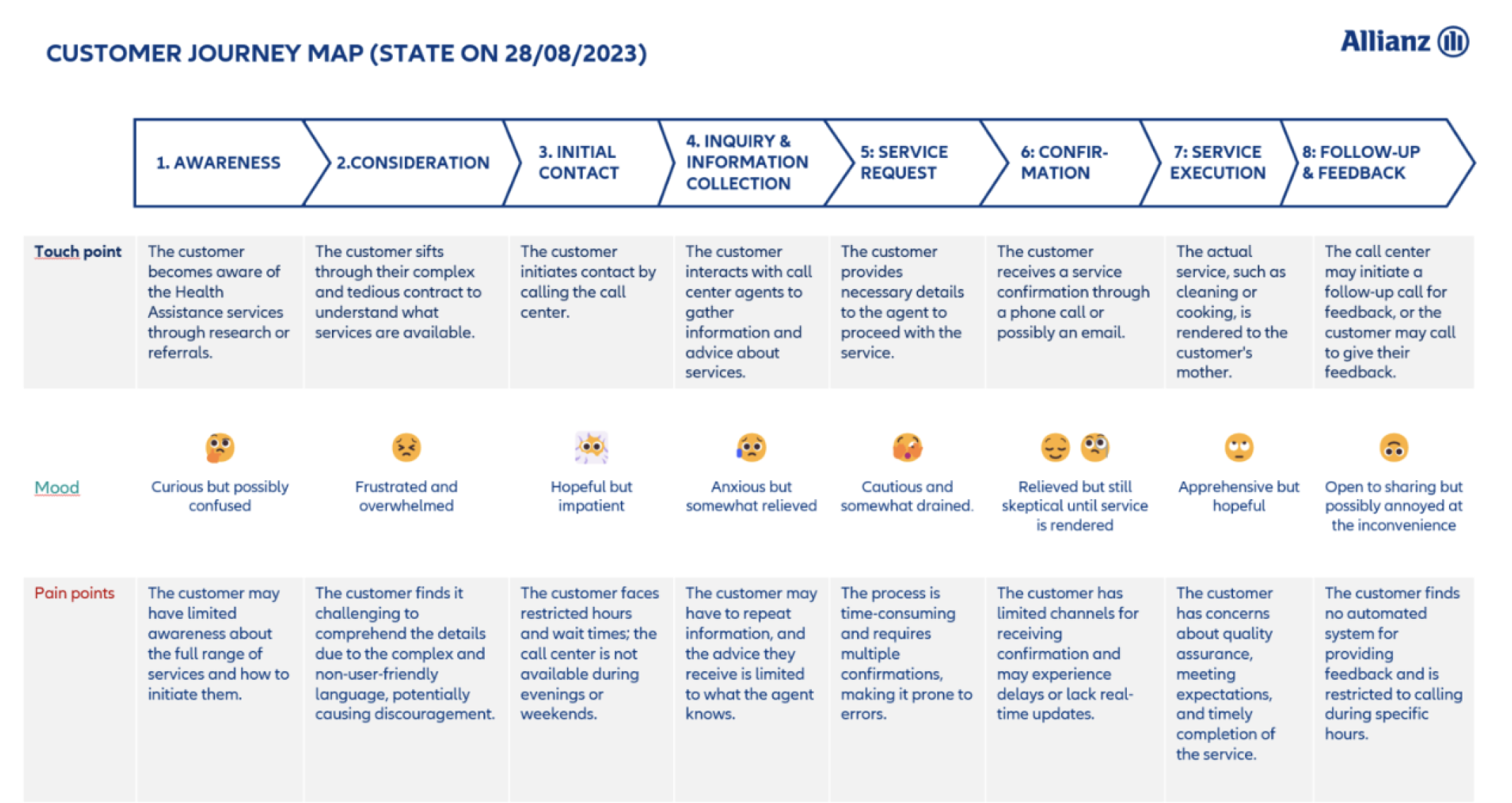
Interviews, surveys, competitive analysis, usability testing. Built Personas and Customer Journey Map.
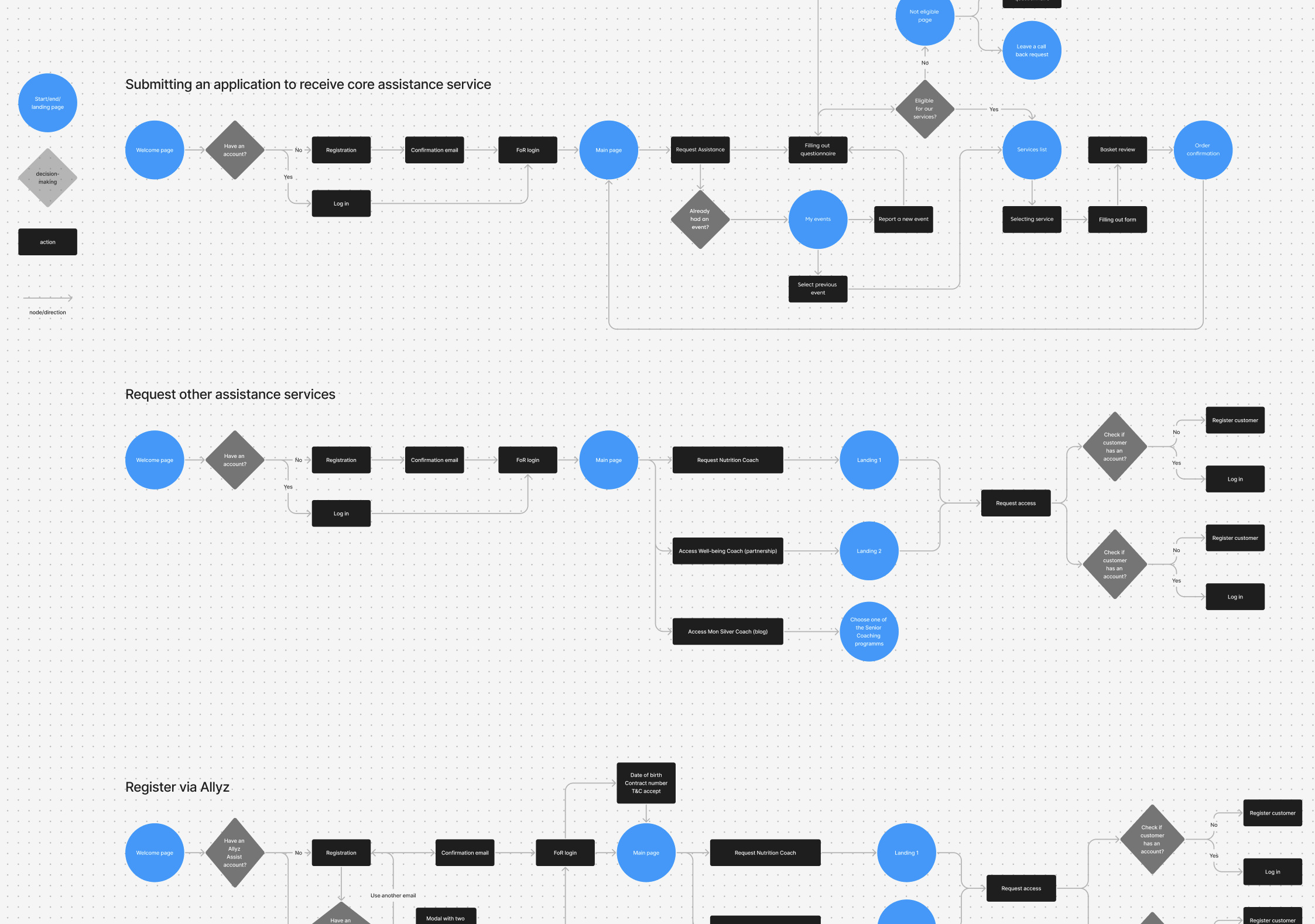
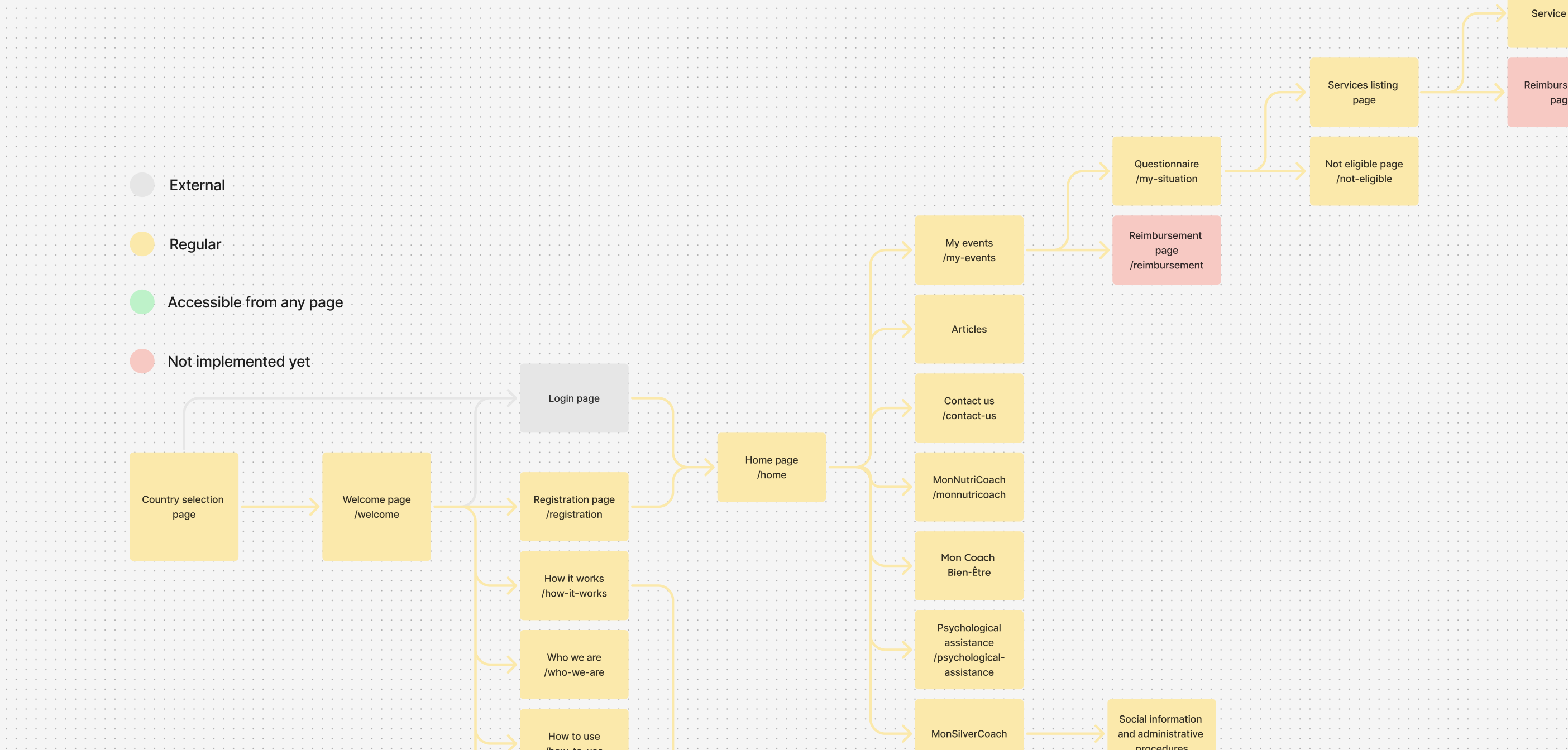
Full Site Map covering user portal and admin back-office. Multiple user flow diagrams for all service scenarios.
End-to-end UI for a fast-growing platform, built on top of an existing brand while creating new patterns.
Built from scratch: full component library, tokens, specs, variants. Adopted later across all Allyz verticals.
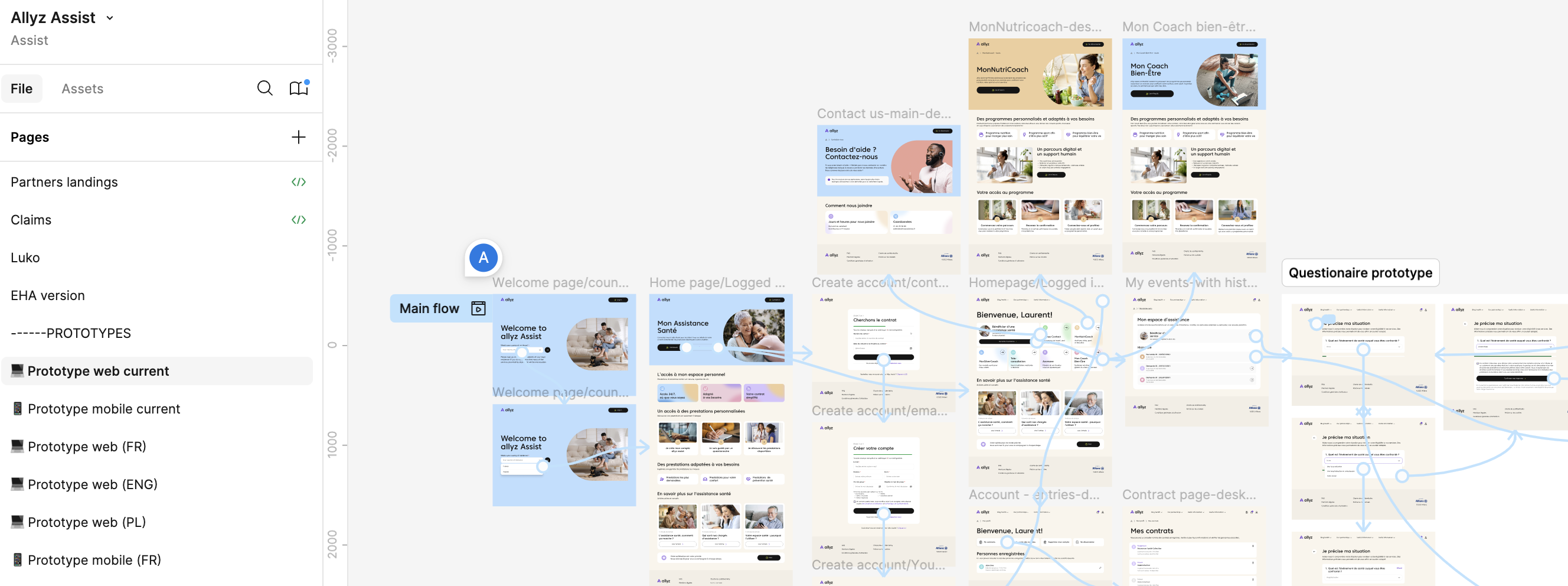
Interactive prototypes for stakeholder and partner presentations. Iterated from master proto to versioned docs.
First designer the dev team ever worked with. Taught them the design process and created developer-friendly docs.
There was no design system when I joined — a handful of screens and a brand guide, which is where the colors and typography come from. The visual direction was largely set before me; what I built is the system around it. Nobody asked for it — I took it on because every undocumented component was slowing down both me and the developers.
I rebuilt it into a full design system: component library, tokens, specs, and documented variants — built during downtime between feature work, alongside the UJM, information architecture, and site map. Maintaining all of it solo, while the main focus stayed on shipping the product, was the hardest constraint of the project.
"After completing the design system, the main Allianz design team adopted it as the foundation for the system across all Allyz verticals — something I built alone, under constraint."
"Alina was our UX designer from August 2023 to November 2024 and played an instrumental role in transforming our product design. She not only took full ownership of the design process — cleaning up chaos and reorganizing structures swiftly — but also pioneered our first design system, which later became a best practice across the organization. Alina's independent vision, assertiveness, and genuine curiosity about both product and business make her an outstanding asset. I wholeheartedly recommend her to any agile team seeking a strong individual contributor."
Early on, I built a single master prototype covering the entire service — every implemented screen plus concepts the developers hadn't even estimated yet. For stakeholder presentations it was brilliant: one artifact that showed the full potential of the project and made future roadmap discussions tangible.
Then it became a liability. Version confusion crept in, the volume of frames became impossible to keep current, and "the prototype" stopped being a source of truth. The fix was discipline over ambition: one prototype, in the primary language, containing only shipped pages and what's currently in development. Presentation impact is worth less than an artifact the team can trust.
The dev team had never worked with a designer. Handing them polished mockups wasn't enough — I had to teach the process itself: what a handoff is, why specs matter, how to read the design system, when to pull me in. That education effort paid off more than any individual screen: it's why the system is actually used rather than admired.
As the only designer, I couldn't keep everything perfect — the design system, the research artifacts, and the product itself all competed for the same hours. I learned to treat infrastructure work (DS, IA, flows) as an investment made during downtime between feature work, and to accept "actively used and good enough" over "complete but late."
Allianz’s core design team took my design system as the foundation for every Allyz vertical — built by one designer, adopted by the whole product family. It also carried the MVP into a second market after I had left.